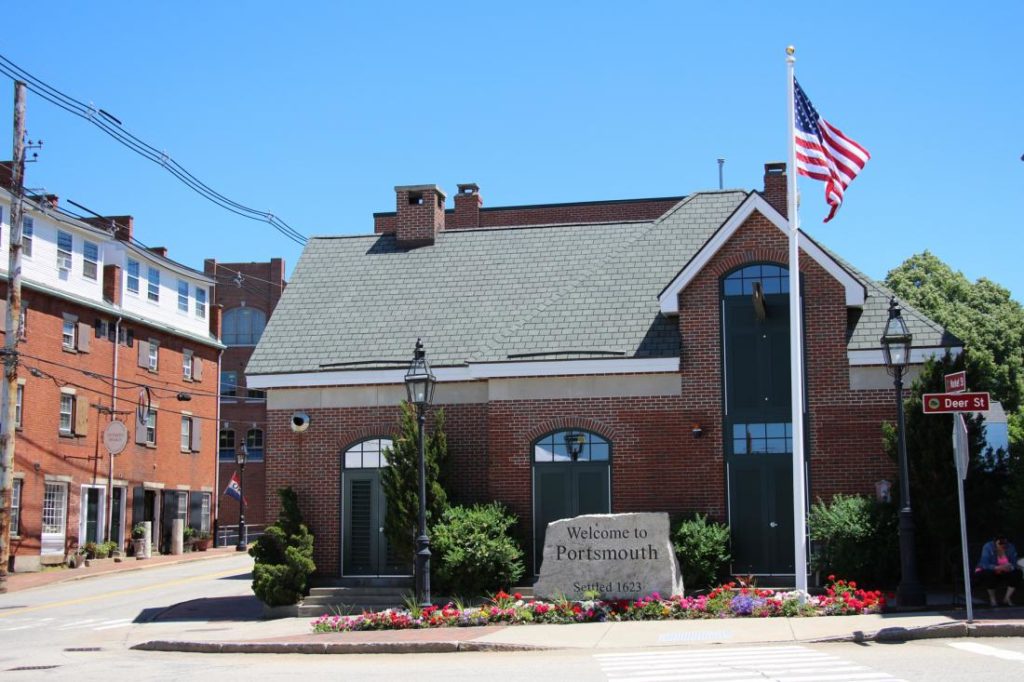
at the Discover Portsmouth Welcome Center 10 Middle Street, Portsmouth, NH
Open 7 days, 10 am–5 pm
Admission:
FREE FREE FREE FREE $7.50
Portsmouth Historical Society Members Seniors 70+ Children under 18 Active & retired military Adults
Admission grants access to the John Paul Jones Historic House Museum at 43 Middles Street, at the galleries in the Academy Building at 10 Middle Street, and can be applied toward a discount on historical walking tours or towards an annual membership
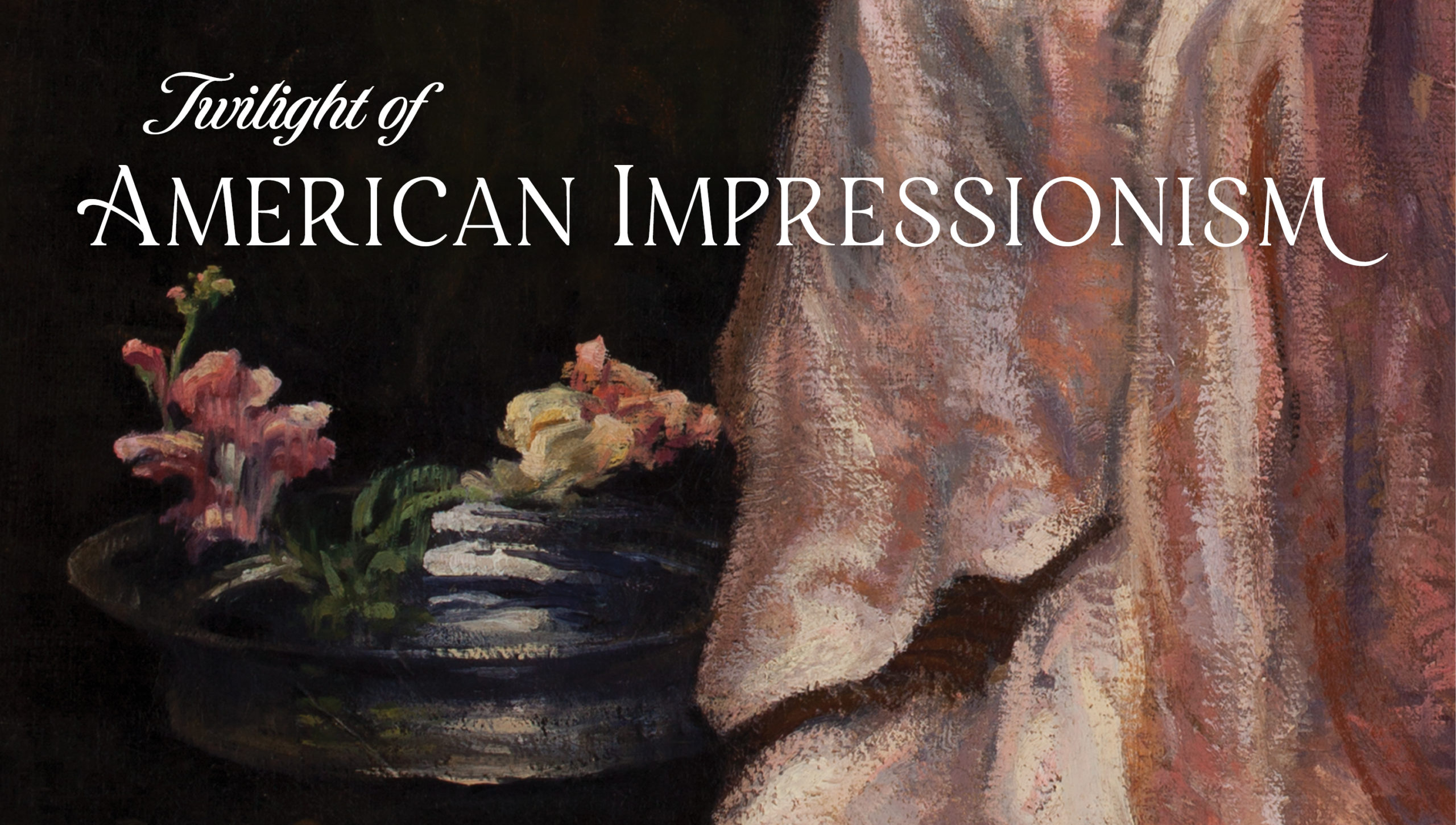
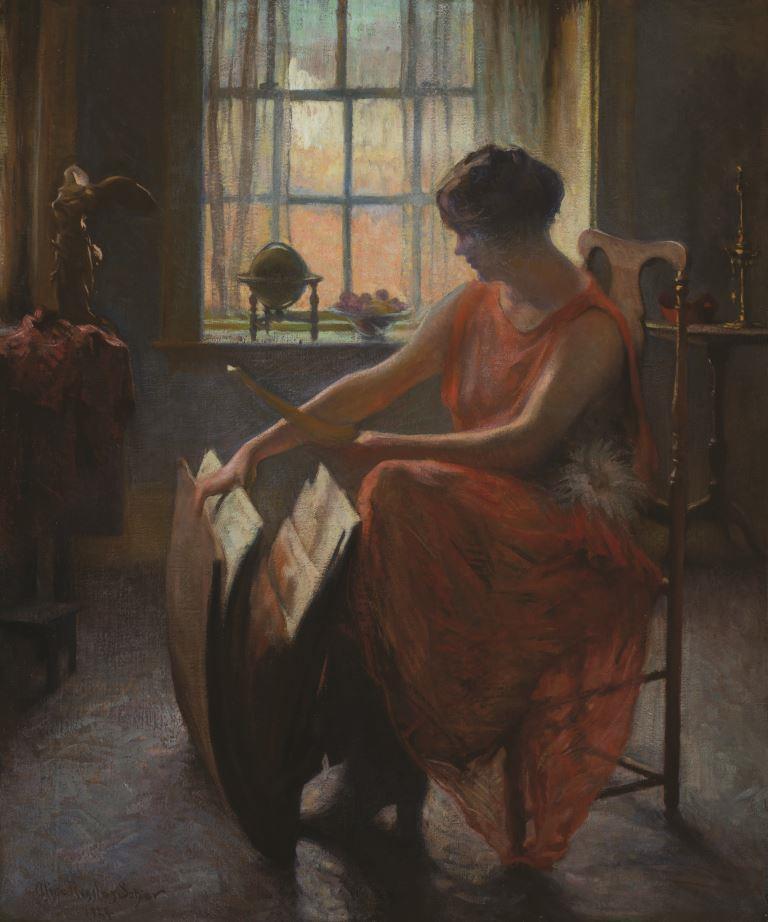
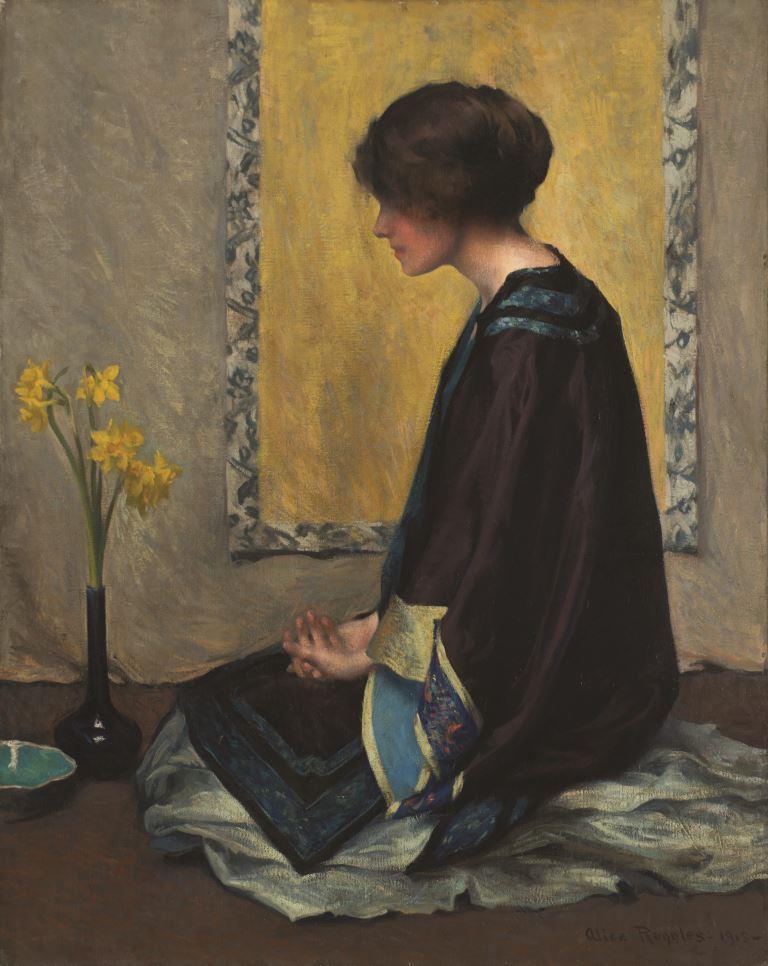
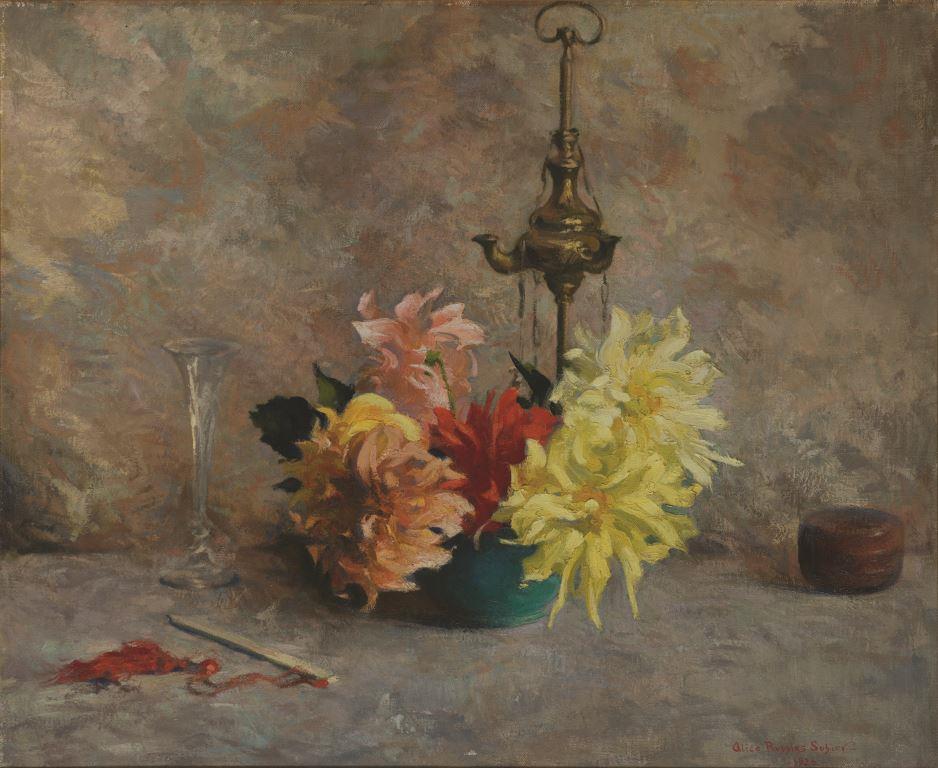
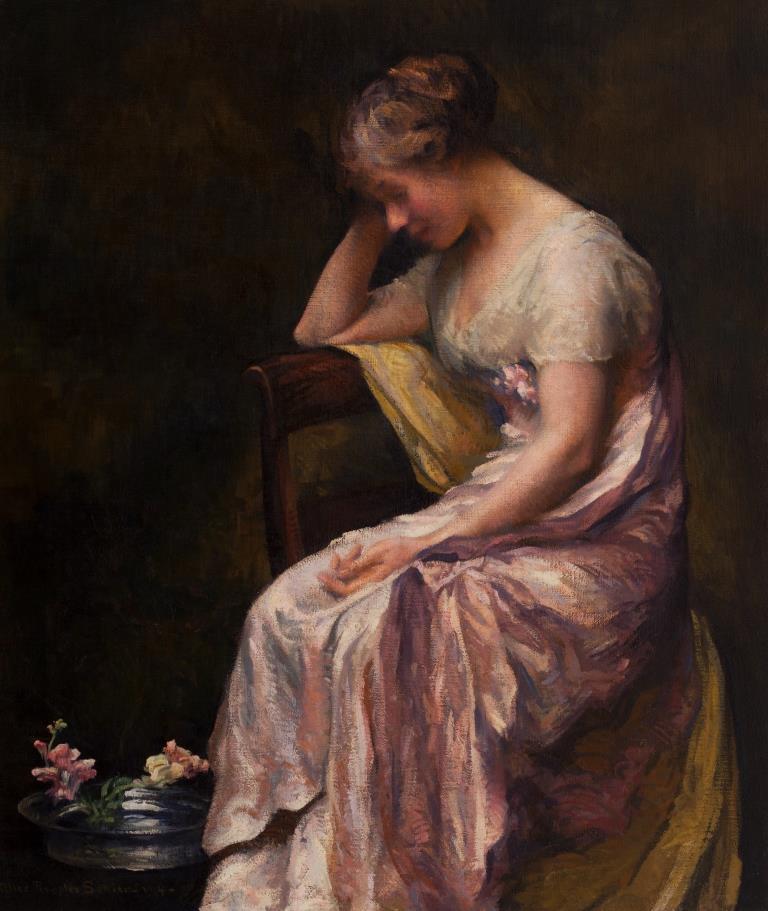
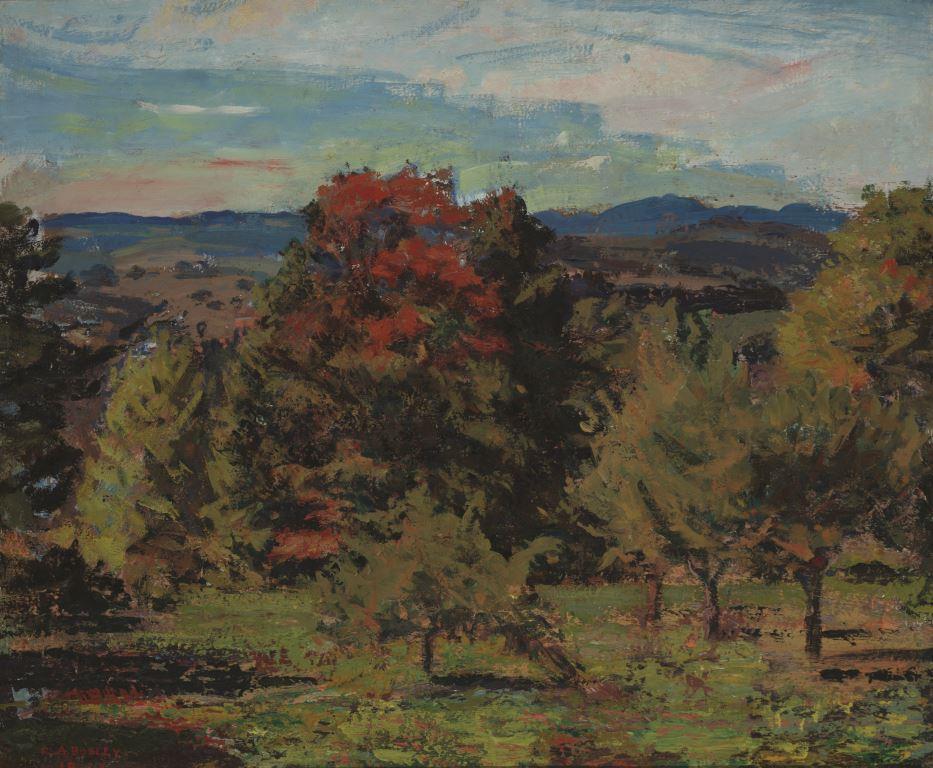
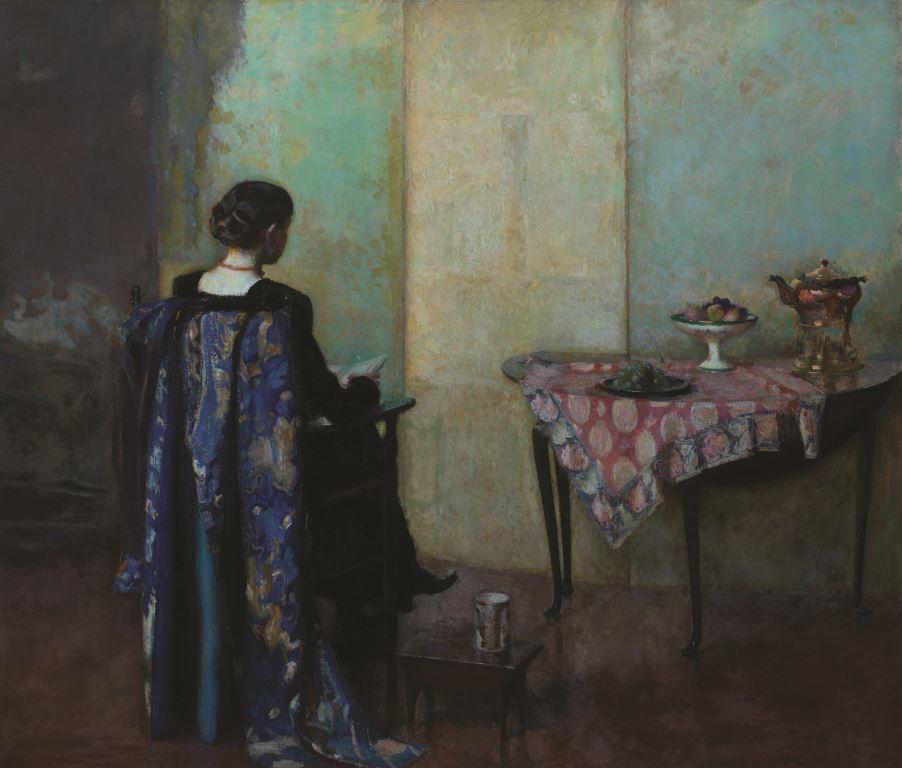
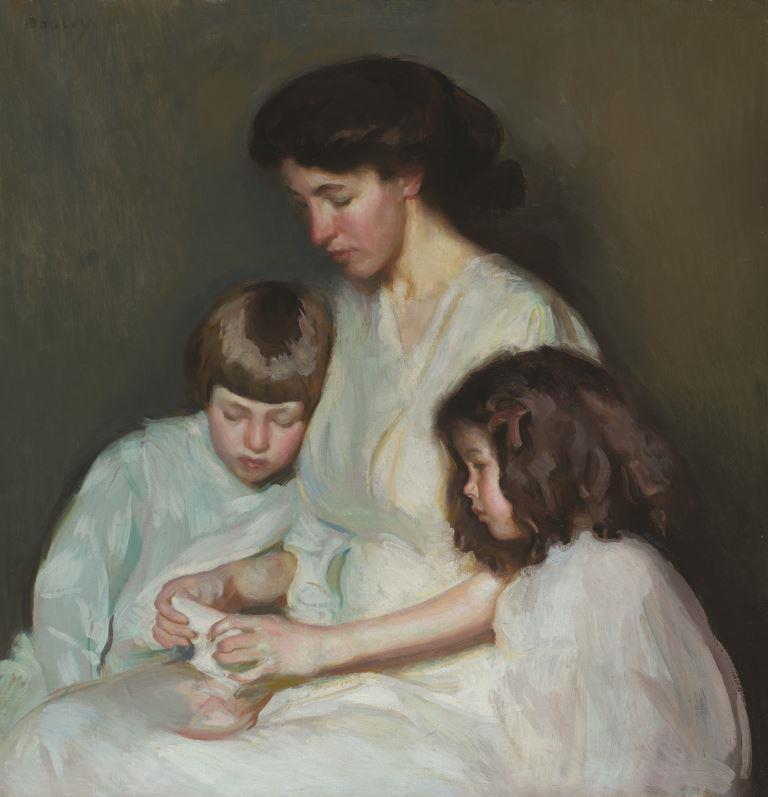
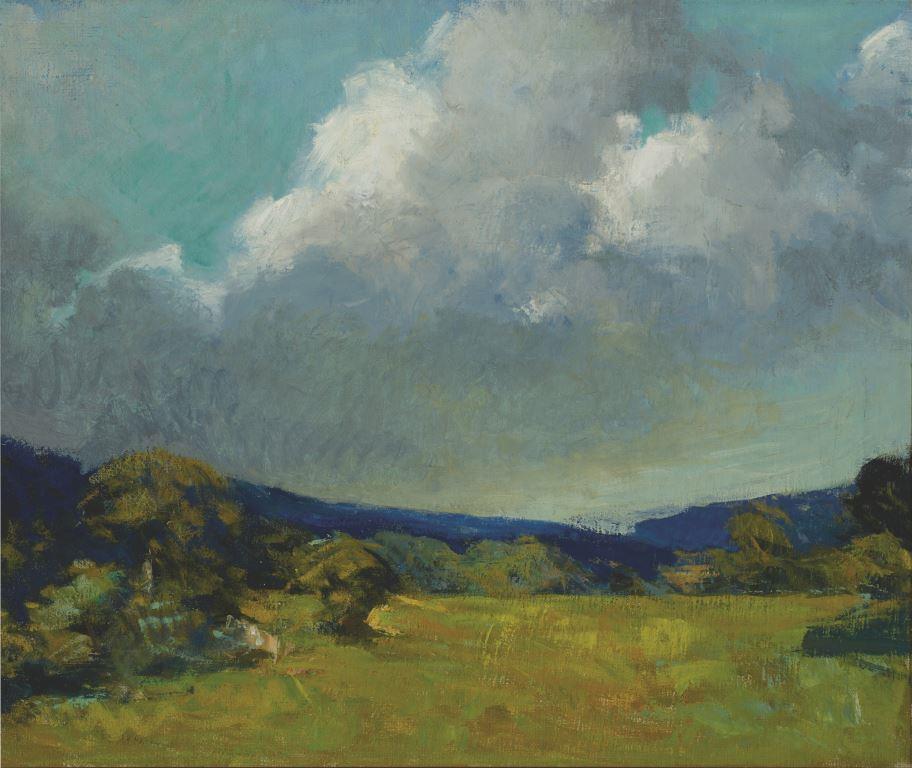
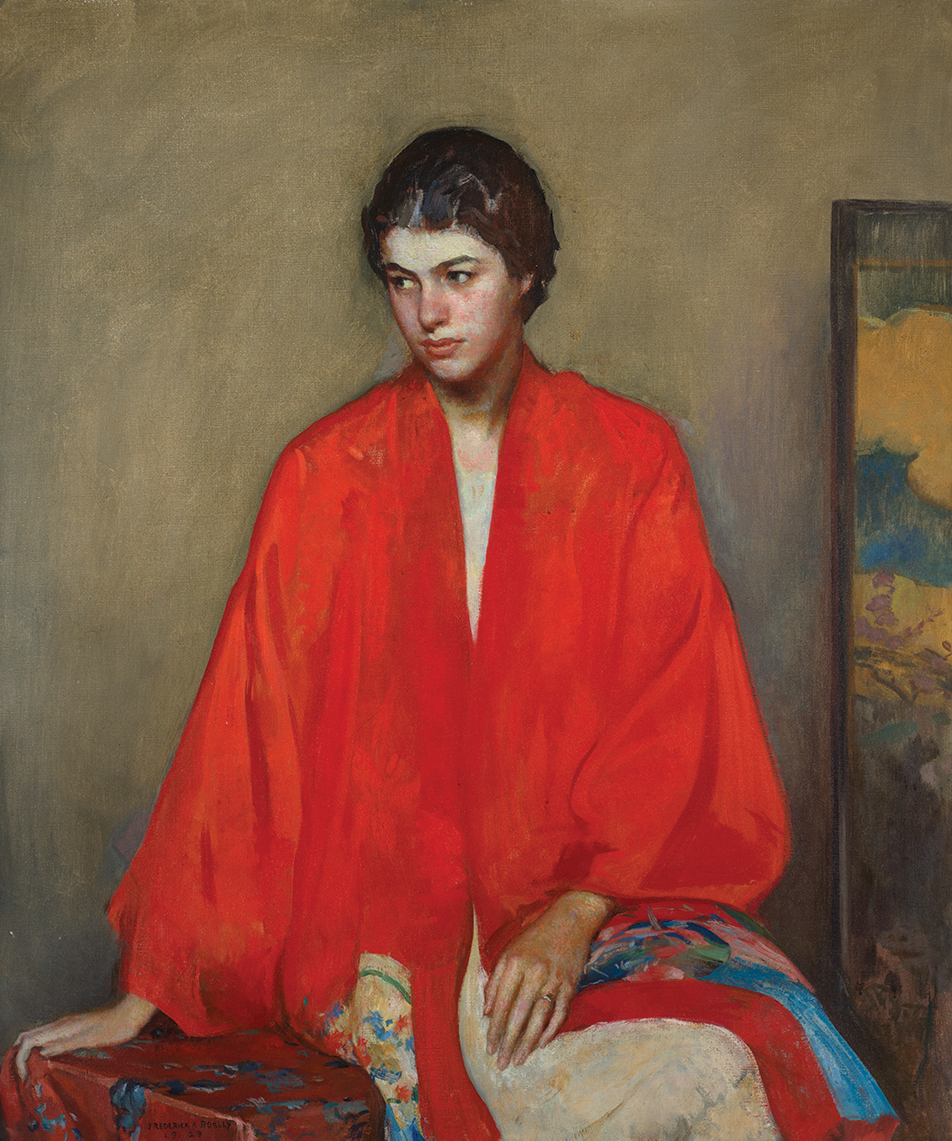
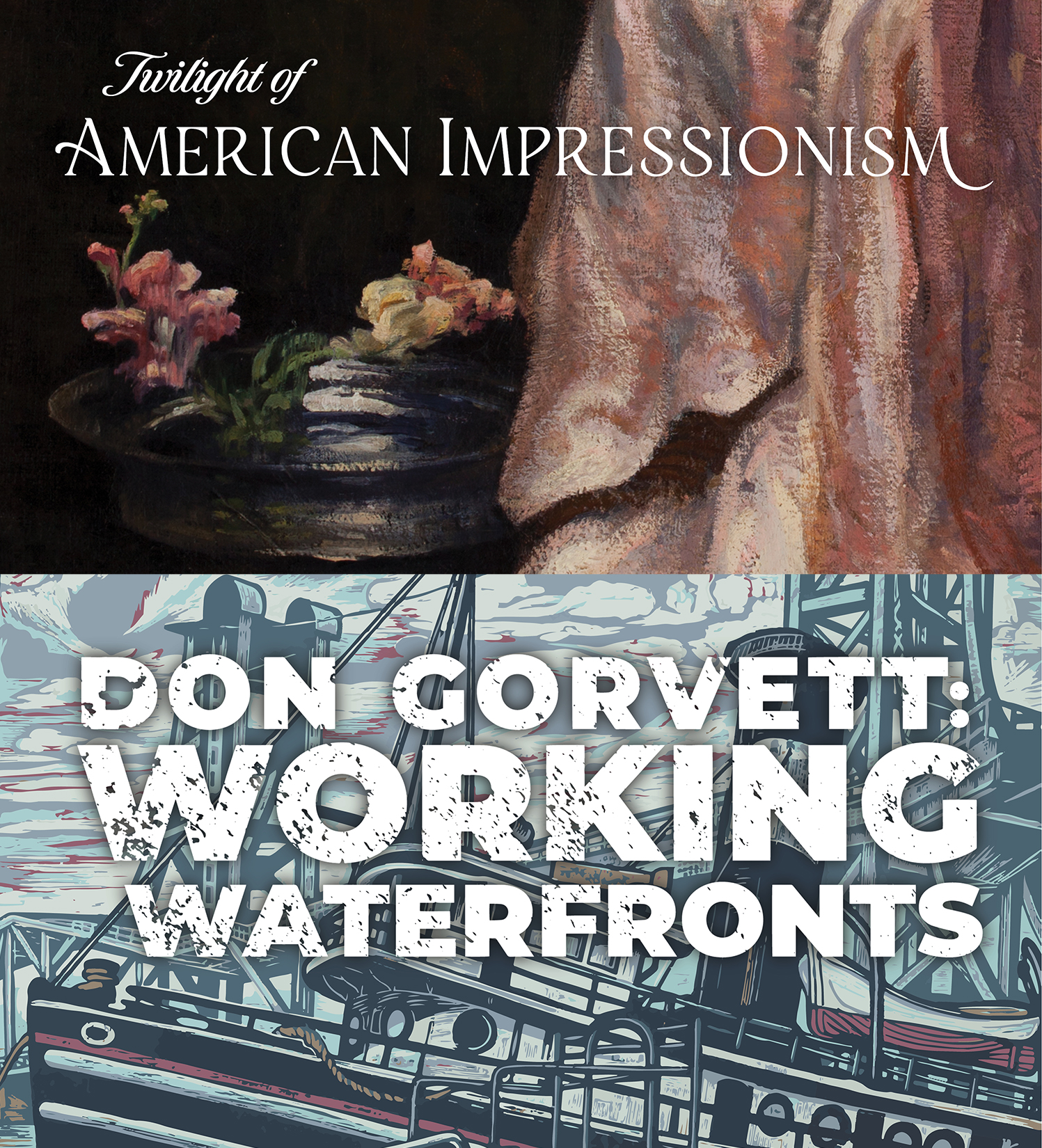
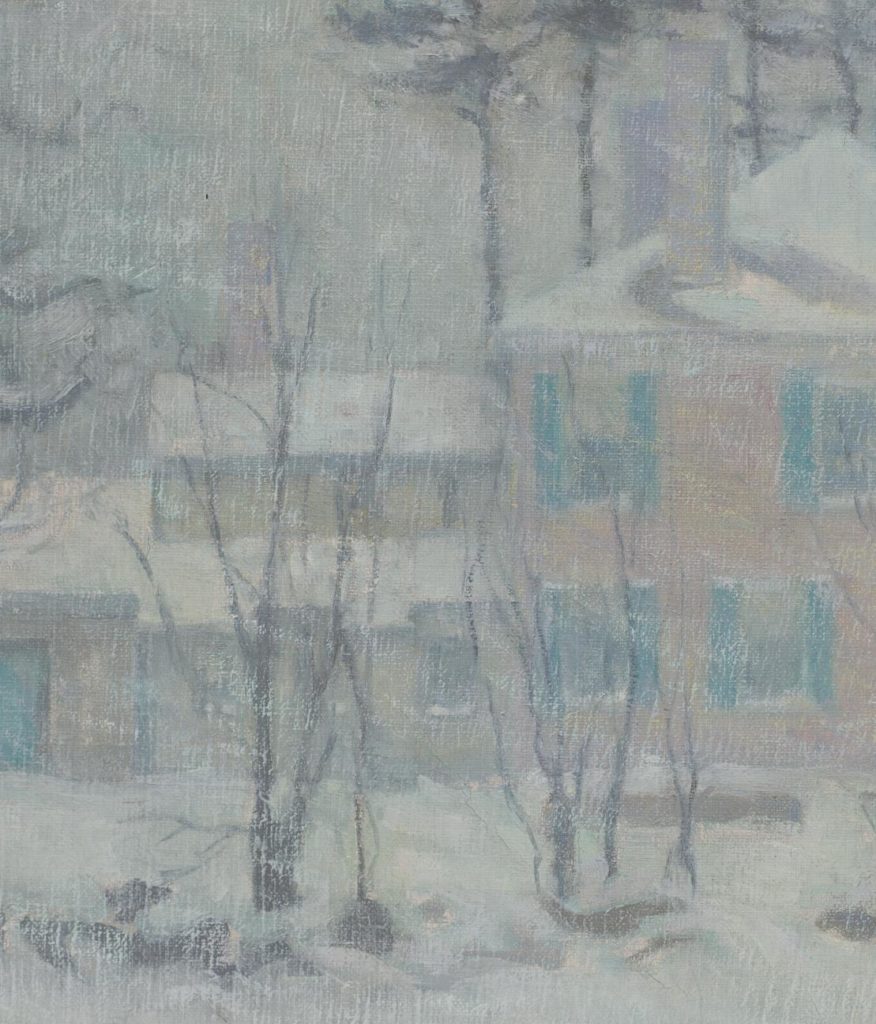
“Twilight of American Impressionism” showcases the largely unsung talents of Alice Ruggles Sohier and Frederick A. Bosley, two American impressionists working at a time when realistic art was falling out of fashion and abstract art was in vogue. These two artists created works of profound quality and depth in the midst of the rapidly changing inter-war era. Their successes and failures offer insight into the difficulty of coping with rapid societal change, and their work, rarely seen in public since it was first painted, reminds us that great art, while not always trendy, stands the test of time. William Brewster, guest curator and descendant of both Sohier and Bosley, brings his unparalleled knowledge of the two artists to the project.
Alice Ruggles Sohier, from a venerable Massachusetts family, received her art education in the Art Students League in Buffalo, New York, and then at the Museum School of the Museum of Fine Arts, Boston, from which she graduated in 1907. During her academic career, she studied with Tarbell and Frank W. Benson, and received many awards and honors. Upon graduation she was the recipient of a prestigious Paige Traveling Scholarship, which provided funds for two years of travel and study in Europe. Upon her return, she exhibited widely from 1910 to 1930, being represented in at least twenty-nine shows throughout the country and receiving a bronze medal at the Panama-Pacific Exposition of 1915. Her work was noted for its realism and treatment of light in the Tarbell manner. Throughout her career, Sohier faced the challenges common to female artists at the time, including balancing career and family. She married Louis Sohier, an engineer, in 1913. (Louis Sohier’s sister Emily was married to Frederick Bosley.) The Sohiers moved to Pennsylvania and, later, to Concord, Massachusetts. Although Sohier stopped exhibiting ca. 1930, she continued to paint until at least 1959.
Frederick Andrew Bosley was born in Lebanon, New Hampshire. After high school, he too attended the Museum School, finishing the seven-year program in only six years. Like Sohier, he studied with Tarbell and Benson and won a Paige scholarship. In 1913, he succeeded Tarbell as the director of the Department of Drawing and Painting and as instructor in Advanced Painting, influential teaching positions he held until 1931. Bosley was known for his portraits, interiors, and landscapes, as well as for his abilities in pencil and charcoal drawing, and his prize-winning work was also widely exhibited. In the 1920s, he painted at the art colony in Peterborough, N.H., and he also attempted to open his own art school in Piermont. In 1930, the Museum School shifted its focus away from traditional representational painting to a more modern approach. Bosley, along with several other faculty members, resigned in protest the next year. He passed away in 1942.
Thank you to the lenders and donors who made this exhibition possible
Martha Fuller Clark and Geoffrey E. Clark • Pauline C. Metcalf / The Felicia Fund, Inc. ☙❧ William & Arlene Brewster • Joseph MacDonald Family • New Hampshire State Council on the Arts ☙❧ Anthony Moore Painting Conservation • Jameson & Priscilla French ☙❧ Piscataqua Savings Bank • Cambridge Trust
“Twilight of American Impressionism: Alice Ruggles Sohier and Frederick A. Bosley”
“Twilight of American Impressionism” showcases the largely unsung talents of Alice Ruggles Sohier and Frederick A. Bosley, two American impressionists working at a time when realistic art was falling out of fashion and abstract art was in vogue. These two artists created works of profound quality and depth in the midst of the rapidly changing inter-war era. Their successes and failures offer insight into the difficulty of coping with rapid societal change, and their work, rarely seen in public since it was first painted, reminds us that great art, while not always trendy, stands the test of time. William Brewster, guest curator and descendant of both Sohier and Bosley, brings his unparalleled knowledge of the two artists to the project.
“Don Gorvett: Working Waterfronts”
“Don Gorvett: Working Waterfronts” presents over sixty works by this famed seacoast master printmaker highlighting the dynamic commercial harbors of the region. As with the artists in “Twilight,” Don Gorvett is a graduate of the School of the Museum of Fine Arts, Boston. Renowned for his imaginative seascapes and “boat portraits,” Gorvett’s work celebrates the mechanical and gritty alongside the serene and picturesque.
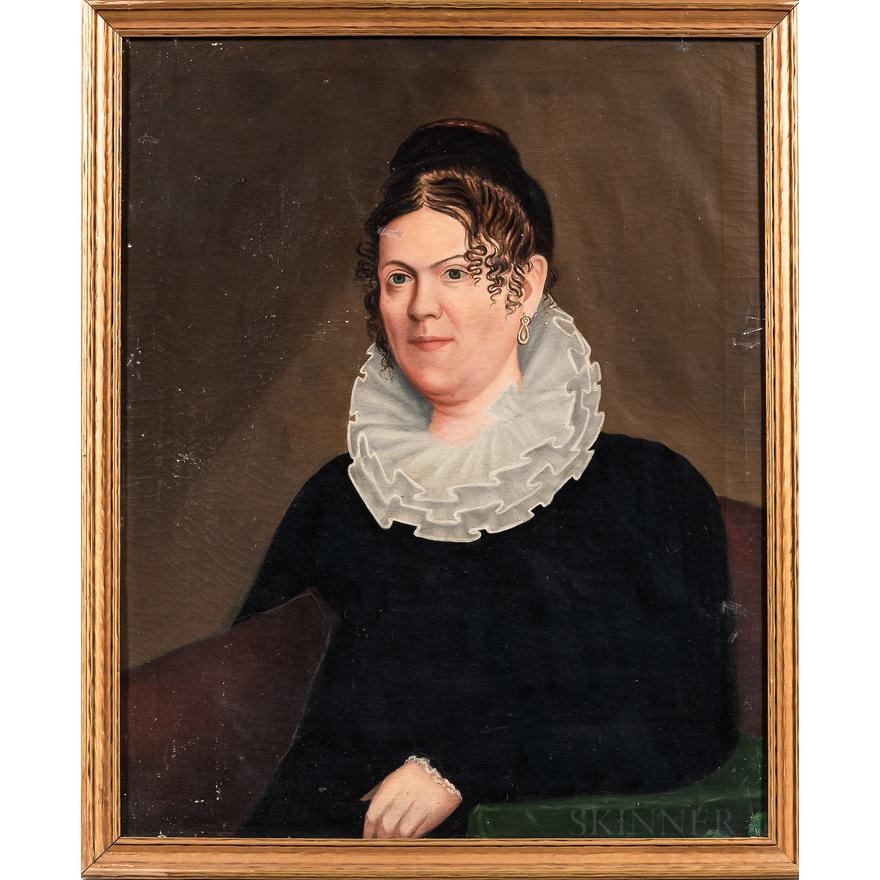
Recent Acquisition: Portrait of Sarah H. Drisco March by John S. Blunt
Until now, the Society did not own a painting by the important local artist J.S. Blunt. At a Skinner’s online auction last November, two friends of the Society stepped up to fill that gap and helped us acquire this example. Although it is unsigned, the research of Deborah M. Child (who gave a great lecture for our 2019 “NH Folk Art” exhibition and is a John S. Blunt expert) determined that it appears in Blunt’s manuscript account book as a purchase recorded on June 30, 1821, by Nathaniel Bowditch March (1782-1862), husband of the sitter (and the artist’s landlord on Daniel Street as well).
March, a Portsmouth saddler and merchant whose papers are at the Portsmouth Athenaeum, paid $12 for this image of his wife, Sarah Huntress Drisco March (1780-1844). Her identity is given in an old label on the back that reads in script: “Portrait of Mrs. Sarah H. March / of Portsmouth, New Hampshire / June 18 [illegible] when she was [illegible] years of age / H.P.” Sarah would have been about 41 in 1821. PHS also has a nice trunk with Nathaniel March’s label. Sarah sports a stylish Regency hairdo with ringlets fashionable at the time, and is wearing earrings and an amazing pseudo-Elizabethan, triple-ruffled collar.
Attributed to John S. Blunt (1798-1835), Portrait of Sarah H. Drisco March, 1821. Oil on canvas; unsigned; 30 x 24 in., modern frame. Portsmouth Historical Society; Museum purchase with funds donated anonymously, 2020.
Upcycled Military Tent Bags at the Museum Shop
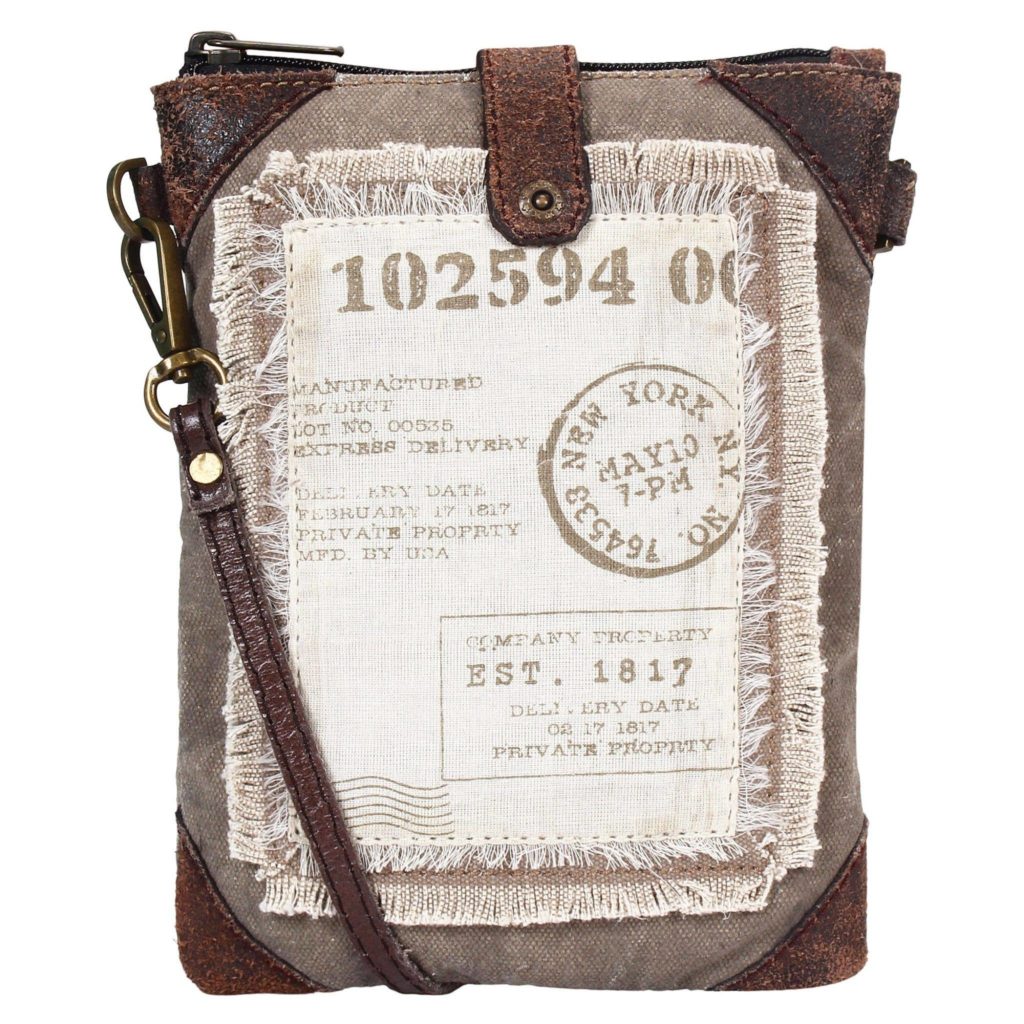
The crossbody bag seen here is one of many styles and sizes of these upcycled bags available at our Museum Shop. Sturdy and stylish, these purses, totes, and overnight bags are made from durable re-milled and up-cycled military textiles used by the army, covering trucks as tarps or providing shelter as tents.
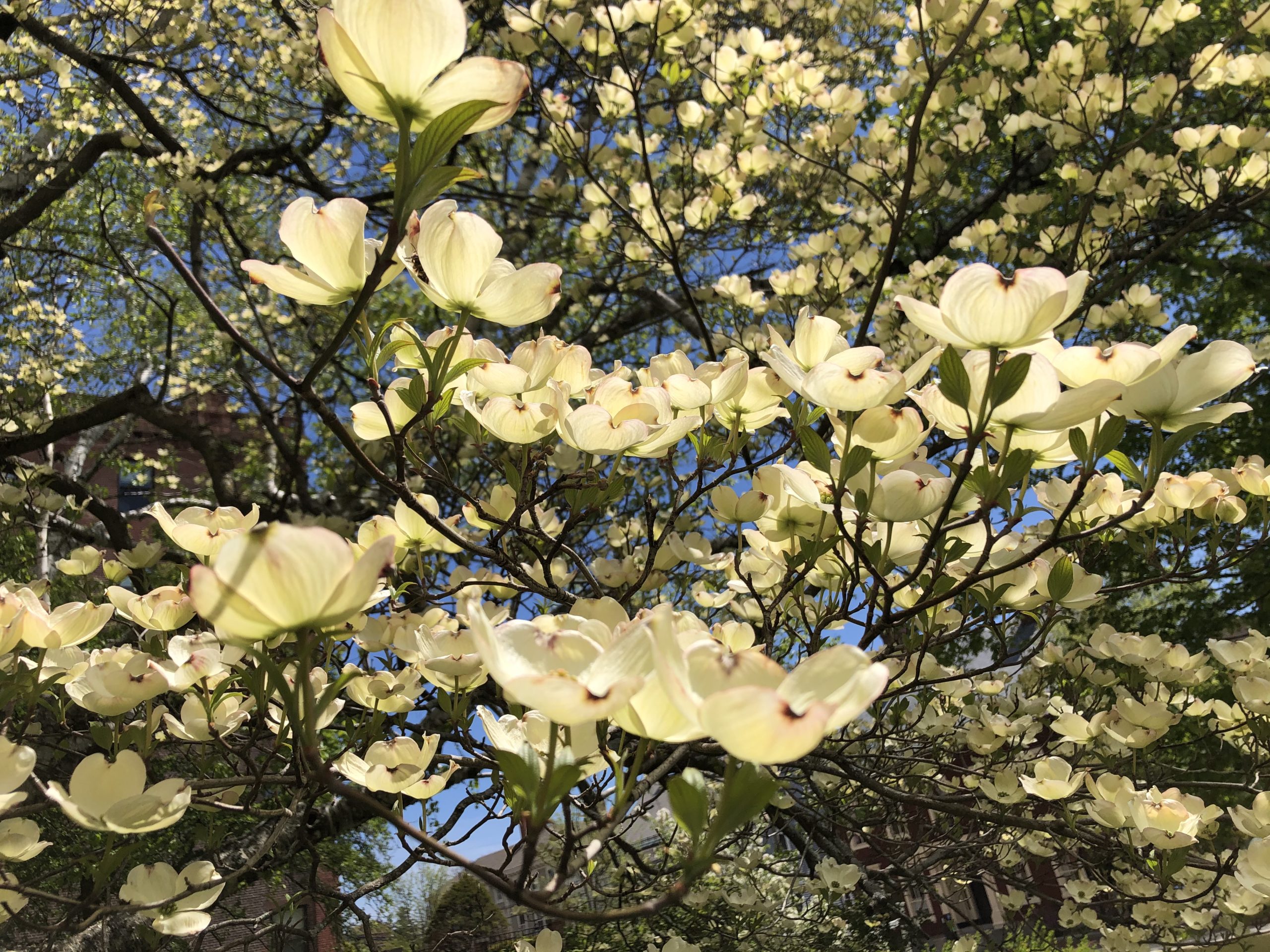
No, this isn’t a current photo of the dogwood tree at JPJ, but it’s cold here at the home office, so some sunshine was needed. Soon, the snow will melt and the flowers will bloom!
Our Warmest Thanks to the Thaxter Foundation
The Portsmouth Historical Society recently received a grant from the Rosamond Thaxter Foundation for an exhibition titled “Imagine That! The Power of Picture Books,” planned for display in 2022. Rosamond Thaxter was a philanthropist, writer, public speaker, artist, world traveler, and lifelong resident of Kittery Point, Maine. The Thaxter Foundation has been a consistent supporter of the Society, providing much needed funding for repairs and interpretation at the John Paul Jones House, and supporting past exhibitions at the Discover Portsmouth Welcome Center.
New City Committee to Address Needs of the Arts Community
The Mayor’s Blue Ribbon Committee on Arts and Nonprofits had its first official meeting this week. The committee, which includes a representative of the Portsmouth Historical Society, will work to identify and address the needs, concerns, and issues facing Portsmouth-based nonprofit arts and culture organizations in 2021. As the community navigates and eventually emerges from the ongoing pandemic, the committee’s primary goal will be to work with the city to foster an environment that supports and nurtures our arts and culture organizations and, where possible, provides resources that help them succeed in 2021 and beyond. Portsmouth Historical Society is proud to be part of the team making sure the cultural institutions and nonprofits that make our city such a wonderful place have the support of City Hall. You can see the recording of the committee meeting on the City of Portsmouth’s YouTube Channel.
What Goes On in the “Off Season”
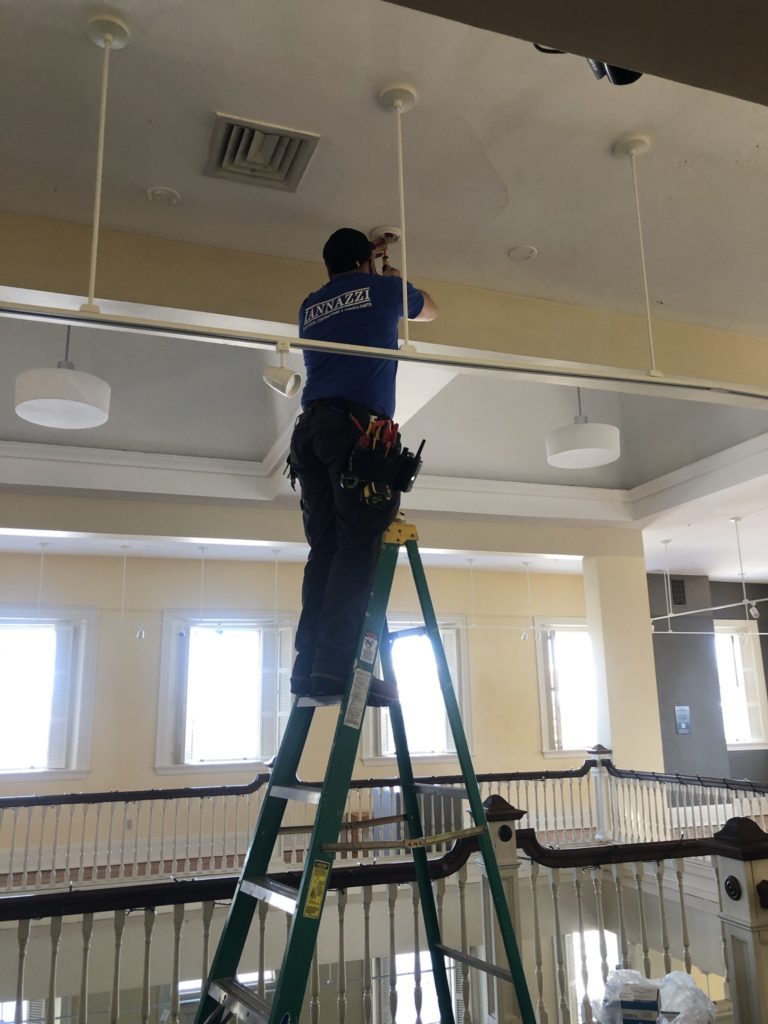
Just because we’re closed doesn’t mean we’re not busy! While building maintenance isn’t the sexiest thing historical societies do, it certainly is important! This off-season we have been working hard at upgrading some of our HVAC motors, doing some redecorating in the Museum Shop, and just recently we had new smoke and heat detectors installed. All very important, and, for those staff members who manage these things, very exciting!
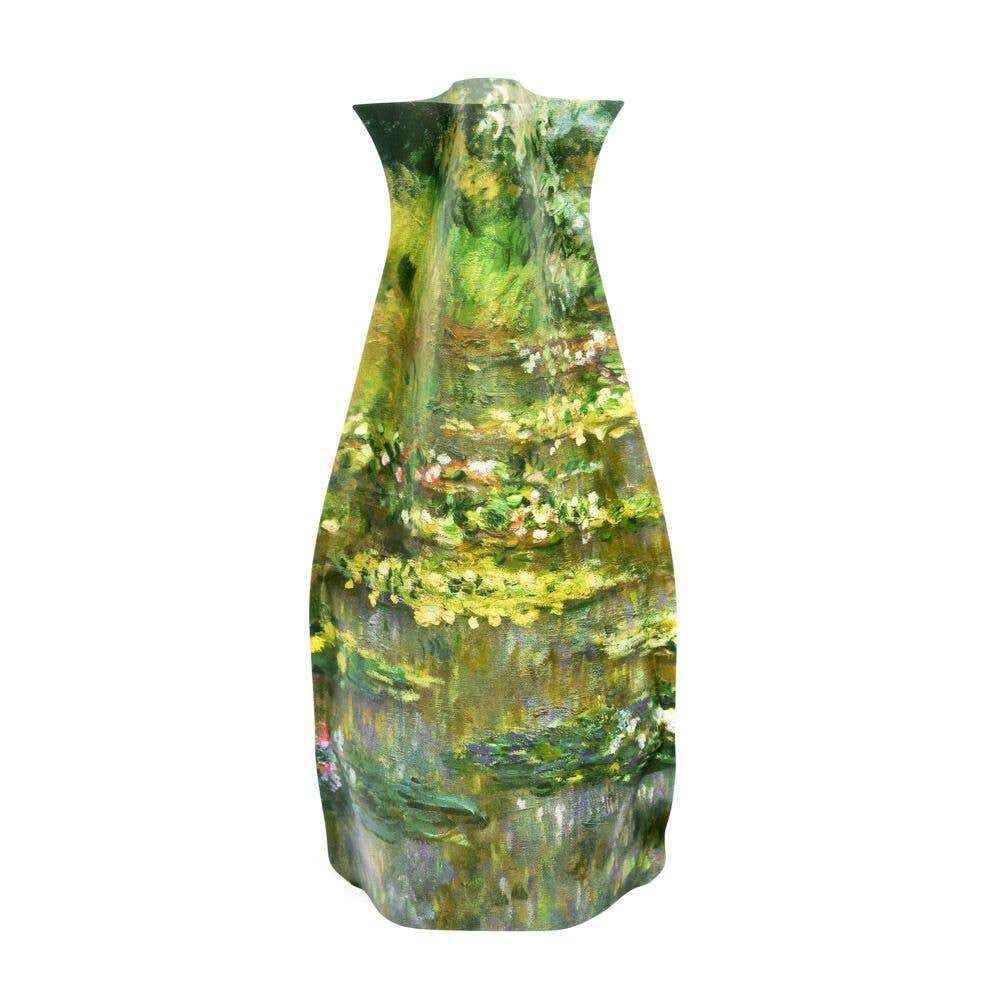
This fun vase is a lovely way to add an artistic flourish to your home office. Made from BPA-free plastic, it lies flat when not in use, and features Claude Monet’s water lilies. Available at our online shop!
Send an Obama Hug for Valentine’s Day AND Black History Month!
The Seacoast African American Cultural Center is teaming up with the Historical Society to offer these funny and heartwarming cards, featuring the friendly grin of our huggiest-ever president!
This unique and oversized card (those hands are nearly life-sized!) is sure to brighten someone’s day. We can add a message and mail this collectible card directly to your valentine!
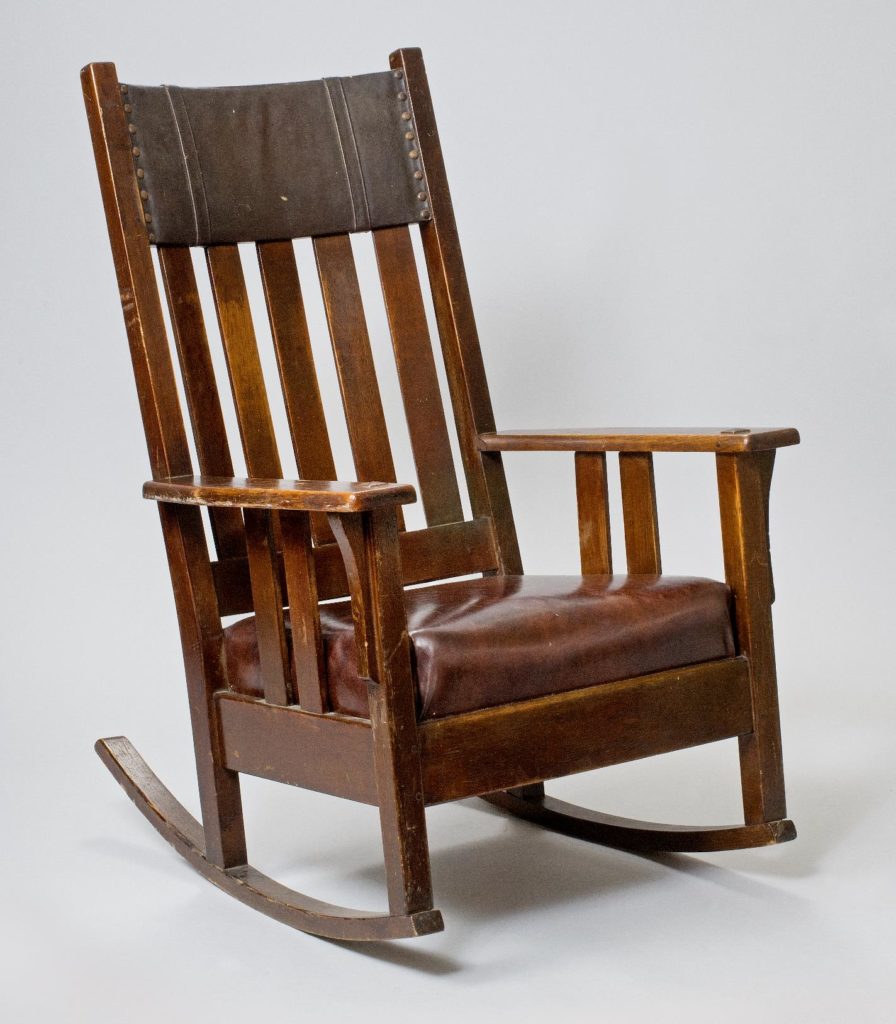
Rocking chair, America, ca. 1900-1920. Retailed by Margeson Brothers, Portsmouth. Oak, replaced leather seat; H. 42 1/4 in., W. 27 1/4 in., D. 33 in. Portsmouth Historical Society; Gift of Bob Shouse, 2014
This chair was used at Rock Rest in Kittery Point, Maine, in operation from 1946 to 1977 as a summer retreat by Hazel and Clayton Sinclair for an African American clientele, providing a safe and congenial haven for Black travelers. Through the efforts of historian Valerie Cunningham and the Portsmouth Black Heritage Trail, the Rock Rest archives are now at UNH, and the site is featured in the Smithsonian’s National Museum of African American History and Culture.
Writing While Black: The Afrofuturistic Writer
This Sunday, the Black Heritage Trail of New Hampshire is hosting another online edition of the Elinor Williams Hooker Tea Talks. Featuring some big names in contemporary fiction, “Writing While Black: The Afrofuturistic Writer” will explore Black writers and characters in a genre where they have not been expected to excel.
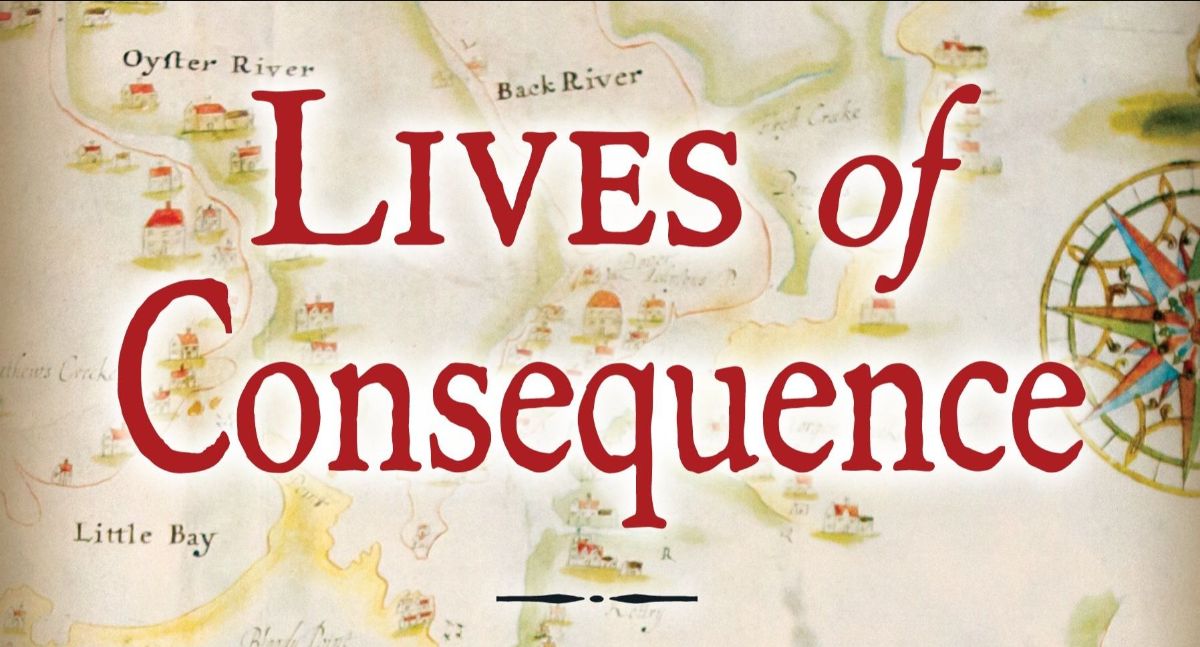
Based on careful research conducted over many years by Patricia Q. Wall, this book presents the first detailed look at the lives of more than four hundred black individuals who lived in Kittery and Berwick, Maine, from the seventeenth century until about 1820. Pat has patiently combed the available public and private documents to find whatever scraps of information had been recorded about these African Americans. Because most lived their lives in the shadows of historical record, much has been lost. As Pat reveals, however, in addition to the personal trajectories of their own lives, they also played important roles in the life of their towns. Thanks to her research, we have a much better understanding of the importance of the Black, Native American, and mixed-race populations in southern Maine, both in qualitative and quantitative terms.
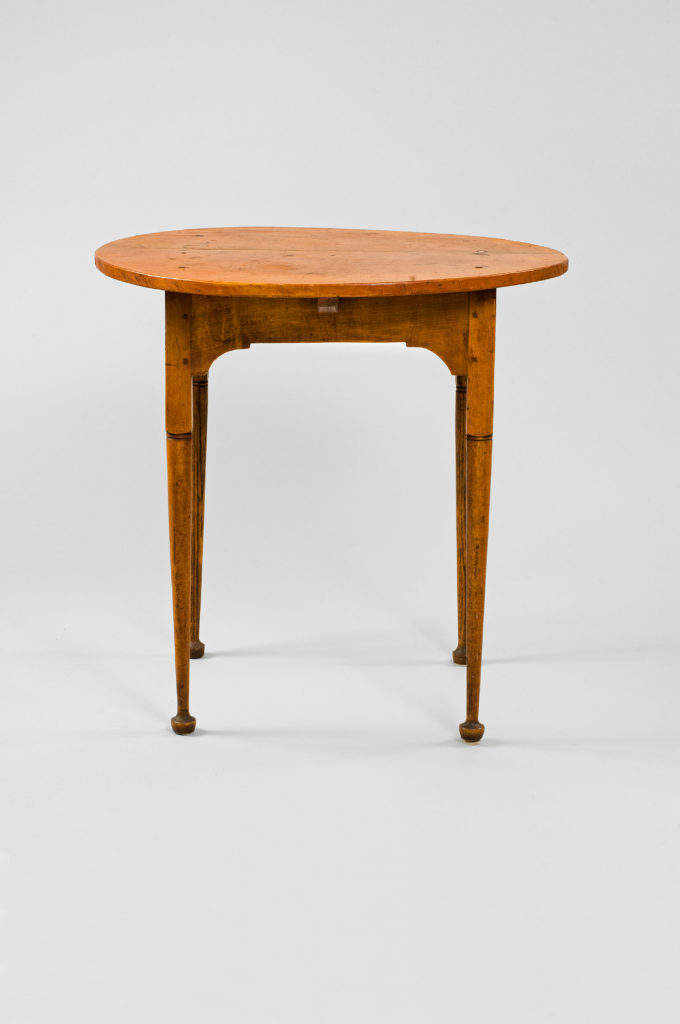
New England eighteenth-century objects with a history of ownership by an enslaved person are very rare. A nineteenth-century inscription on the underside of this table’s top is one such object. The note reads: “This table came from / Sir William Pepperell. / He gave it to his slave / Molly Miles.” Research by Patricia Q. Wall, published in her Lives of Consequence (Portsmouth Marine Society Press, 2017), identifies Molly Miles (ca. 1718-1827) as an enslaved person owned by Sir William Pepperrell of Kittery Point, Maine, and later members of his family. Molly died in the Eliot almshouse at nearly 108 years of age. She “retained the faculties of her mind to the last, walking perfectly erect, with a firm step, and has not a wrinkle on her face, and could distinctly see to read her Bible without glasses.” We are fortunate to have this material reminder of her life.
Table (“Molly’s table”), Seacoast area, ca. 1750 with later additions. Maple; two replaced legs, oak; H. 27 in., Diam. top 27 in. Gift of Alan and Anne Cutter (2017.2).
Coming this April…
We’re working hard in preparation for our 2021 season.
Stay tuned
for sneak peeks of all the fabulous works of art that will be on display this spring and summer!